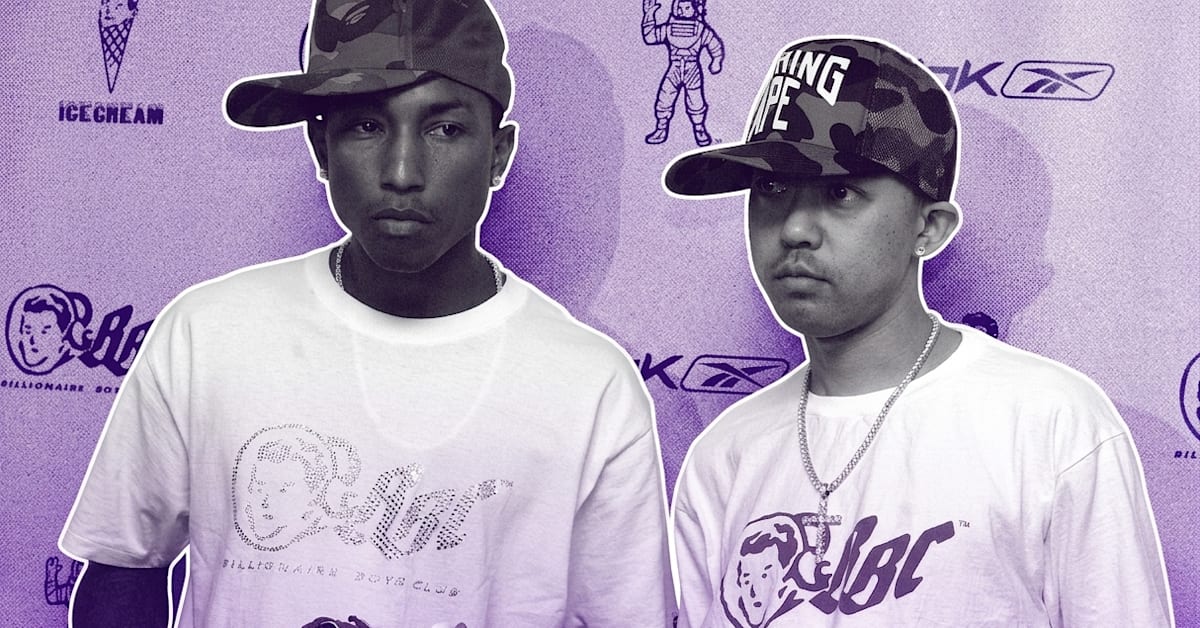


Hiroshi Fujiwara, known as the godfather of streetwear, was born on February 7, 1964, in Ise, a coastal city in central Japan far from the fashion capitals that would eventually define his career. As a teenager, he was drawn to the confrontational energy of punk music and the Sex Pistols, going so far as to hunt down Seditionaries, the Vivienne Westwood and Malcolm McLaren label that dressed the movement. At 18, he moved to Tokyo and planted himself in Harajuku, the neighborhood that was becoming the epicenter for street fashion in Japan.
Fujiwara traveled to London and met McLaren and Westwood; he even shared an apartment with Boy George from Culture Club.
In the 1980s, hip-hop entered the picture, and after a trip to New York to experience the culture firsthand, Fujiwara expanded on the punk foundation he built in Ise. A DJ by trade, he absorbed both scenes not as a passive fan but as someone who understood how to carry ideas across borders, a skill that would define everything he built afterward.
In 1987, Fujiwara and his collaborator Kan Takagi launched a column called “Last Orgy” in Takarajima, an independent counterculture magazine. The column blended music coverage, fashion commentary, and cultural reportage in a format that had no real equivalent in Japanese publishing at the time. Hip-hop, punk, skateboarding, and American brands like Stüssy all got inches, giving readers a direct line to Western street trends before the internet made that kind of access normal. The column shared a name with a Tiny Panx track—the group that Fujiwara and Takagi had formed together—which released a song called “Last Orgy” on the Major Force label.
In 1990, Fujiwara founded GOODENOUGH and his brand drew inspiration from two labels he’d been tracking closely: Stüssy and Anarchic Adjustment, a British brand with ties to skate, BMX, and punk. Those two reference points gave GOODENOUGH its core tension: California casualness filtered through a harder-edged sensibility, and the result helped establish what Japanese streetwear could look like on its own terms.
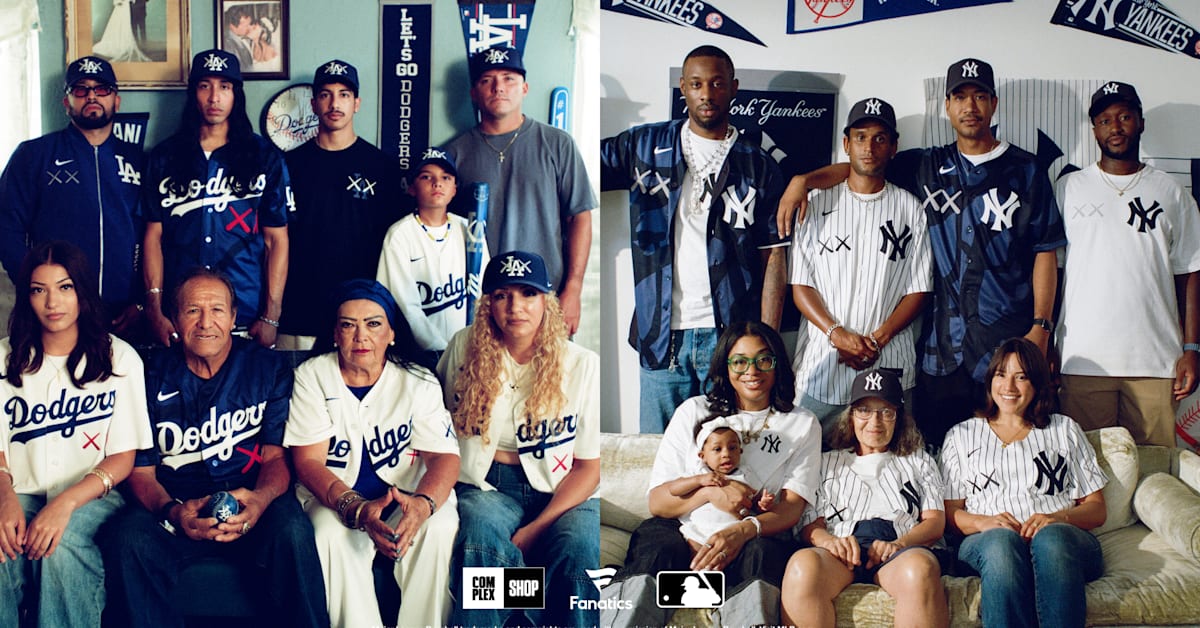
GOODENOUGH arrived at a moment when Tokyo’s Harajuku scene was hungry for something homegrown, and its influence rippled outward in ways that are now well-documented: you can trace a line from Supreme back to Fujiwara, and a collaboration between GOODENOUGH and Supreme in 2025 made that connection explicit.
Fragment Design operates on a principle that runs counter to how most brands work: it has never manufactured its own products. Fujiwara launched the label in the late 1990s after stepping away from GOODENOUGH, and formalized it around 2003. Instead of producing standalone collections, Fragment is a creative lens, its identity expressed entirely through collaborations with other companies across fashion, footwear, electronics, and beyond. Even the name has an origin story: Fujiwara reportedly found the word “fragment” in the dictionary, and borrowed the double lightning bolt logo from an earlier project called Electric Cottage.
The list of partners spans industries in a way few streetwear-adjacent labels can match, from Nike to Louis Vuitton to Levi’s to Beats by Dre.
Fujiwara’s collaborative history with Nike dates back to 2002, when he teamed up with former Nike CEO Mark Parker and legendary Air Jordan designer Tinker Hatfield for the first series of HTM releases. The original projects included premium Air Force 1s and Air Wovens, and continued over the next decade and a half, adding innovative footwear like the Lunar Flyknit and Kobe 9. Fujiwara’s Fragment label partnered with Nike for the first time in 2010 on a Tennis Classic collab, followed later that year by a Footscape Motion, multiple All Court Lows, a Match Classic co-collab with Undercover, and most notably, a city pack of Dunk Highs.
The Fragment Design portfolio expanded to Jordan Brand in 2014 when the pair dropped the first shoe in Jordan Brand’s “Remastered” program—an Air Jordan 1 High that featured the brand’s lightning bolt logo on the heel.
Fujiwara’s Nike work continues today, most recently in 2026 with minimalist takes on the Nike Mind 001 and 002, and Air Max Liquid.
The breadth of Fujiwara’s work through Fragment Design is sprawling. Within a single year, the lightning bolt appeared on product from Nike, Starbucks, Stüssy, Neighborhood, Casio, Carhartt, Beats, and Disney, among others. Taking in the scope of the brand’s entire history, the list expands to include Oakley, Cole Haan, Clarks, Converse, Levi’s, Sacai, Visvim, Martin Guitar, and Moncler — whose joint project ran under the name 7 Moncler Fragment Hiroshi Fujiwara. On the luxury end, Louis Vuitton and BVLGARI have both worked with fragment.
What holds all of it together is a philosophy Fujiwara has articulated plainly: “I do many luxury things but also still underground things. I think to surprise people you need a good balance with high and low.”
Music runs parallel to everything Fujiwara has built. A longtime DJ, he’s explored punk, hip-hop, and house music. His group Tiny Panx was part of that early wave of Japanese artists taking hip-hop seriously as a form rather than a novelty.
His solo discography stretches across seven studio albums, with slumbers 2, from October 2020, being the most recent. “Like the previous album, slumbers, I’m not particularly trying to make new music that is popular right now. Actually, regardless of whether it is ‘new’ or ‘old,’ I honestly just want to put out whatever is in my archive of things that I like and want to do,” he has said. He writes the songs, sings them, and appears—and dances—in his own videos, keeping the whole operation as personal as the rest of his work.
Read the full article here