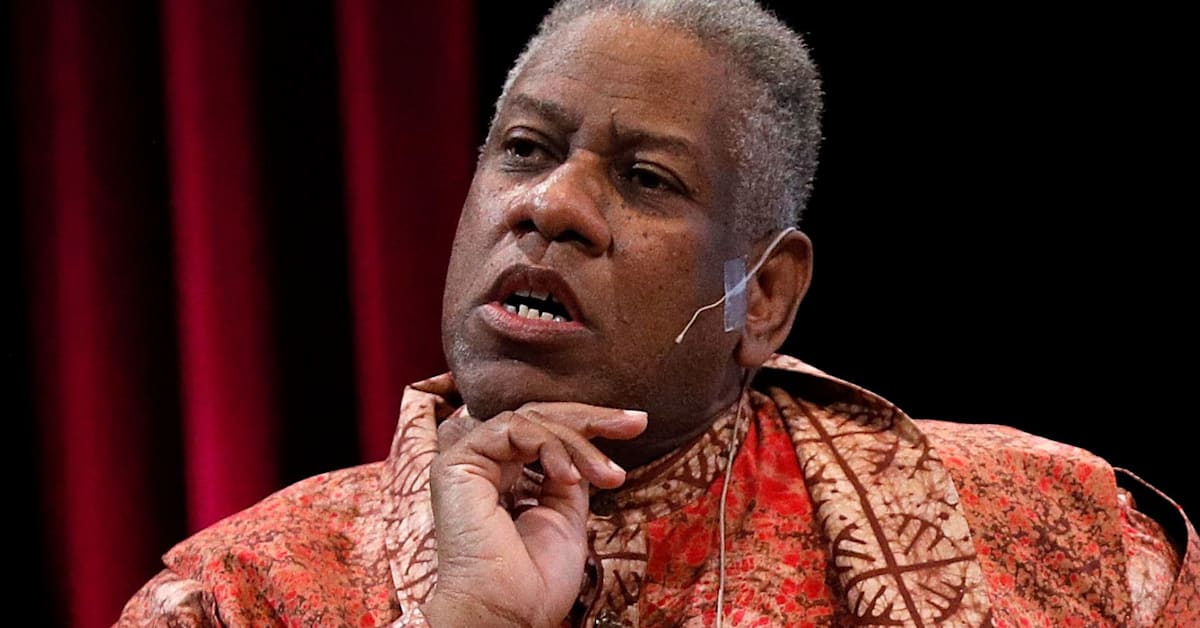
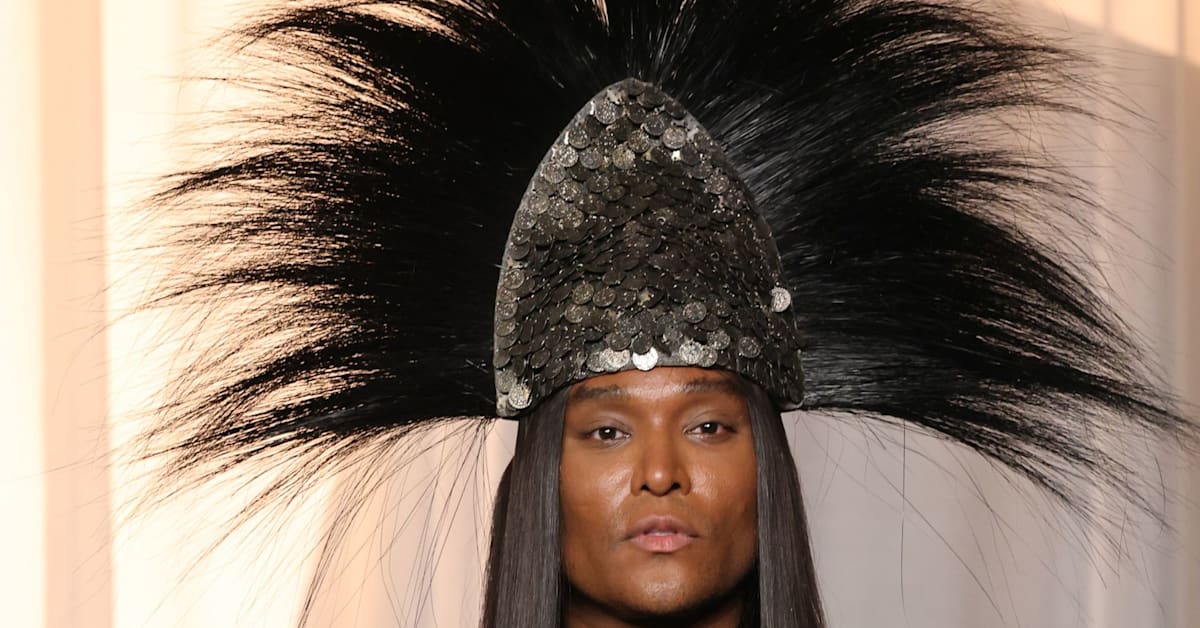

Before André Leon Talley became one of Vogue’s most commanding figures, he brought his unmistakable eye to Ebony.
The magazine marked Talley’s Oct. 16 birthday by reopening its archives and spotlighting his brief run as a fashion editor in the early 1980s—a chapter that placed Black designers and models at the center of the luxury conversation decades before the wider industry began treating representation as a priority.
Talley joined Johnson Publishing after working at Women’s Wear Daily and W, where his success came with intense racism and discrimination. An invitation from Ebony fashion pioneer Eunice Johnson offered something those predominantly white institutions lacked: an environment that embraced his Blackness instead of treating it as an obstacle.
The job also connected his rarefied fashion career to a publication that already carried enormous weight in the community that raised him.
“My family did not read WWD at all, nor would they even have known where to purchase that publication,” Talley wrote in his 2020 memoir, The Chiffon Trenches. “But they all subscribed to and read the monthly EBONY and JET.”
For the Durham-raised son of the segregated South, joining Ebony meant his work was suddenly reaching his relatives, his church family and Black households across the country. “Finally, I had a job that would make my entire church family and all of my aunts and cousins proud,” he wrote.
He used that platform with intention. In a July 1980 spread, Talley covered Black designers as serious creative forces while confronting the uneven playing field surrounding their work. His reporting addressed their artistic influences, the dues they were forced to pay and the resources routinely denied to them.
Rather than framing Black designers as occasional exceptions inside someone else’s industry, he documented them as architects of fashion in their own right.
Talley carried that same energy into a November 1980 feature on Black models and their growing influence. “Black models have become the perfect expression and image of elegant fantasy, modern dignity, and the new freedom and confidence all Black women have gained over the past ten years,” he wrote.
The piece gave Pat Cleveland, Beverly Johnson, Iman, Mounia and Peggy Dillard their flowers while acknowledging the scrutiny, colorism and limited visibility Black models faced in mainstream fashion publishing.
Talley, an alumnus of the HBCU North Carolina Central University, later became Vogue’s fashion news director and its first Black male creative director.
He also mentored emerging talent, championed Black designers, styled Michelle Obama, and brought fashion history to television through House of Style and America’s Next Top Model.
Read the full article here