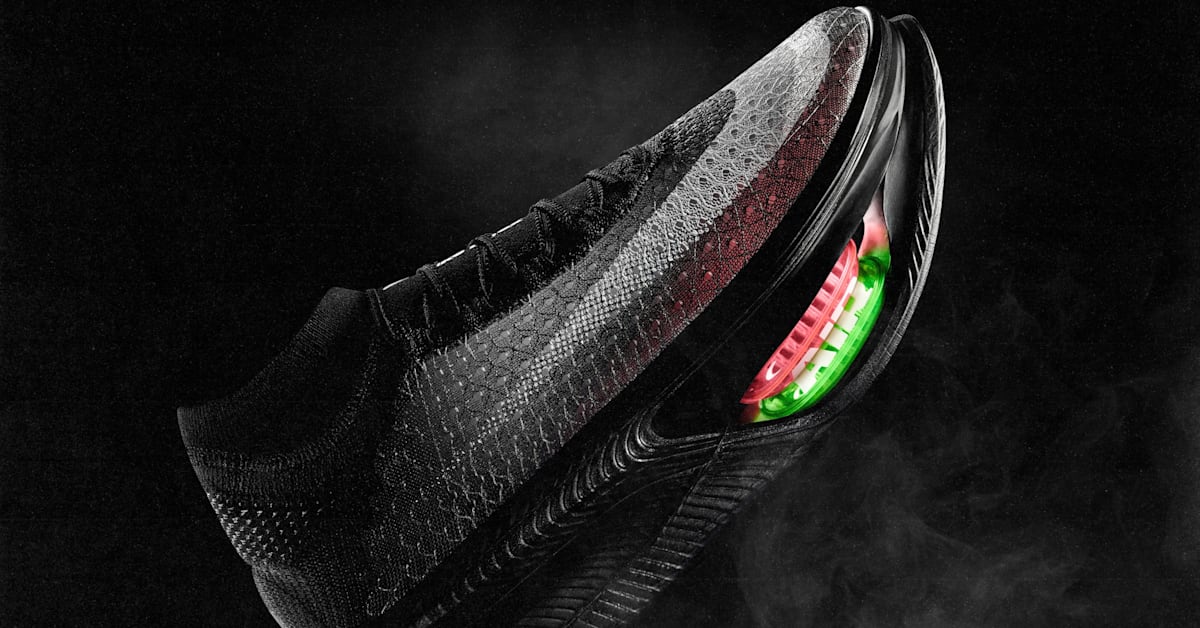

The Nike Apex is one of the brand’s most anticipated running sneakers of 2027, and it’s also one of Nike’s most important models since catapulting the “super shoe” era in 2017 with the Vaporfly 4%.
The Swoosh says the Nike Apex is designed for some of the fastest athletes in the world, as well as recreational runners chasing ambitious goals. The model is both sleek and aggressive-looking, all while jam-packed with the brand’s latest performance tech. The first iteration of the Nike Apex will arrive on January 7, 2027 at Nike.com and retails for $350.
Before the Nike Apex’s debut next year, we need to go back to the origins of Nike Racing and the process it took to finally land on its latest performance runner. Nike’s philosophy for its long-distance running shoes prior to 2017 focused on efficient cushioning without adding unnecessary weight, and that formula is best embodied in the Zoom Streak 3.
Then it all changed with the Vaporfly 4%, which used thick ZoomX foam for the rocker-styled midsole and a carbon fiber plate embedded within for propulsion. The Vaporfly 4% tech and design became the standard for the brand to build from, as it provided around a four-percent running economy improvement compared to previous models. This led to the introduction of the Vaporfly Next% in 2019 and the Alphafly in 2020.
From Nike’s perspective, it says the shoe is a “pinnacle expression of race-day innovation, created for marathon runners chasing every possible second.” Aside from being designed for the marathon distance, it doesn’t specify how fast the runner needs to be or whether you’re new to the sport or the distance, which is where we come in to test the sneaker.
Some caveats to note: I’m a recreational runner who runs around two to three marathons a year and regularly runs around 40 miles a week. For this review, this writer ran around 30 miles in the shoe before wearing it at this year’s Chicago Marathon, which adds another 26.2 miles.
We’re not here to tell you to buy the Nike Apex or not, but if you’re on the fence, this review is intended to help you feel more informed about the shoe before you make that decision in January. Here’s a full review of the Nike Apex.
If you’ve run in the Alphafly 3 or 4, the fit of the Nike Apex’s upper feels very similar. The FlyknitX used for the Apex feels lighter, and the open mesh design is slightly more breathable. I recommend going up half a size, as with any other running sneaker, but the upper had a secure fit despite how thin the material is.
This is the most interesting part to me about the Nike Apex. The sneaker has a zero-drop ZoomX LT midsole, meaning both the heel and forefoot are the same height. Standard shoes typically have an 8 mm to 12 mm drop, with the heel taller than the forefoot. I’m not going to pretend I know the science behind the two, but it did make me use more of my calves on the run than other pairs in my rotation. This is also the first Nike sneaker to feature double-stacked Air Zoom units at the forefoot, which are immediately noticeable upon your first few steps. Despite all the innovation stuffed within the sneaker, it felt lighter and more responsive than any Alphafly I’ve worn before, especially toward the latter half of the marathon. Overall, the propulsion effect Nike has set out to achieve in the shoe is there.
Nike uses a combination of Goatek and Fast Shot rubber components throughout the outsole, and while those parts have held up well so far, the portions with exposed ZoomX LT foam from the midsole have pretty standard scuffing and fading on the surface. There’s nothing to be too concerned about, but it’s worth mentioning given that this is a fairly expensive shoe at $350 and designed to be worn on unpredictable roads.
The Nike Apex is designed to be the brand’s pinnacle race day shoe and I believe it achieved that. The model is lighter, designed to be faster, and obviously more expensive than the others in the range. The athlete still needs to go and put in the miles and time in order to reach their running goals— solely purchasing this sneaker will not automatically get you there. But for competitive runners who want the best marathon sneaker Nike has to offer and are willing to put in the work for it, this is easily the best option.
Read the full article here
![The Best New Sneakers Available on Complex [September 2026]](https://images.complex.com/complex/image/upload/c_crop,h_1127,w_2000,x_0,y_0/g_auto:aoi_800_452_400_225,ar_1.91,c_fill,q_auto,w_1200/sanity-new/vc8kmxmt5pbjhltyuxu5 "The Best New Sneakers Available on Complex [September 2026]")