



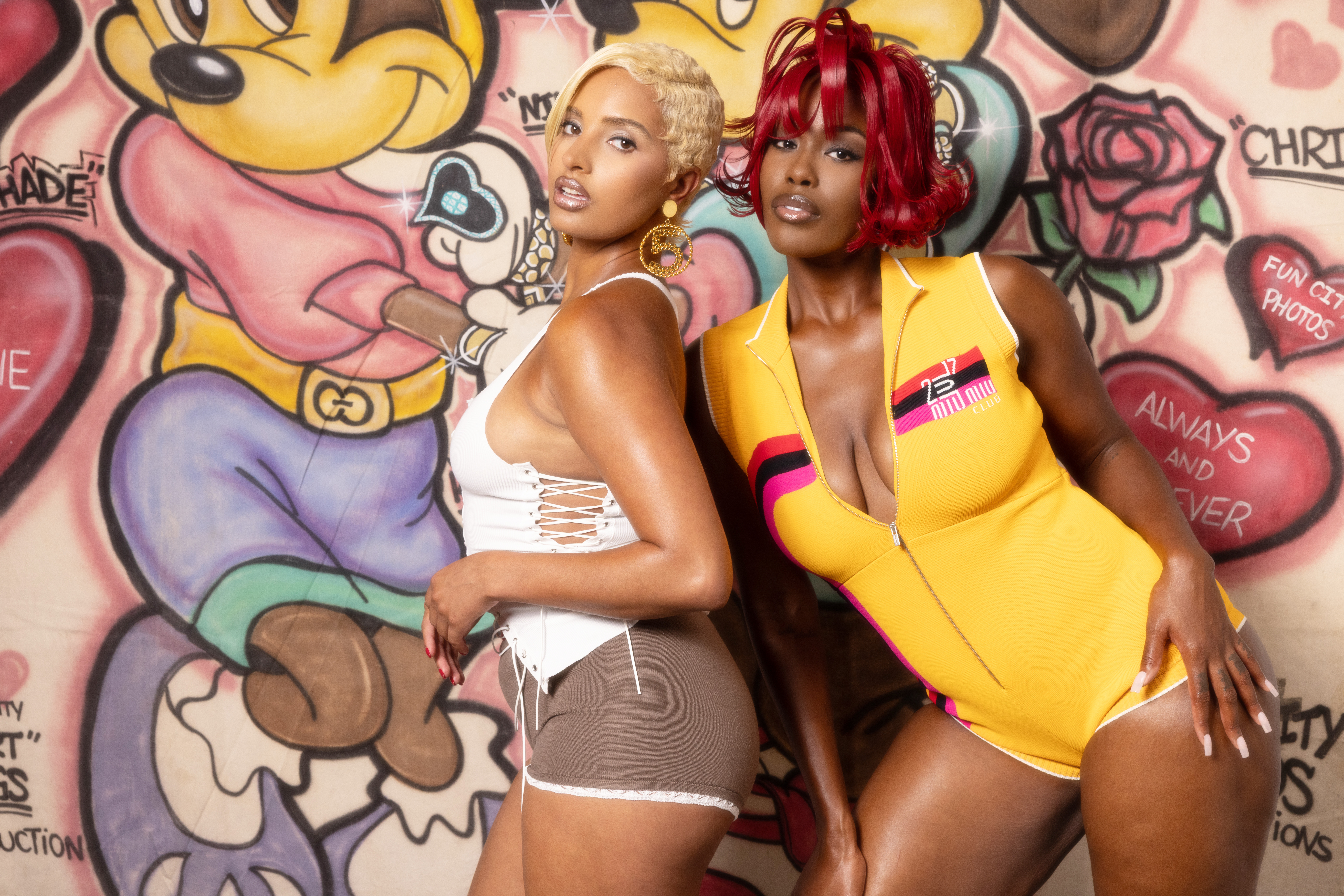

Edwin “Phade” Sacasa discovered graffiti in the early ’70s by playing shadow to his older brother on weekend trips up to the Bronx. In the decades that followed, Phade and the Shirt Kings were trailblazers who introduced graffiti into the streetwear space. Their airbrushed tees were popular amongst rappers, from LL Cool J to Run DMC. Their designs have lived on to this day through official projects with legacy brands like Champion and streetwear titans like Supreme. But T-shirts and the sides of trains weren’t Phade’s only backdrops of choice. At age 14, a friend introduced his aesthetic to a new format: canvas.
“Painting on the trains, those were gigantic moving canvases. Those were our galleries,” Phade told Complex. He had taken a halt on graffiti writing, but still had the urge to paint large-scale. “I ran into this guy, Delta, and his partner, Sharp. They were like, ‘Yo, you need to start doing canvases, bro. We just came back from Paris…I got like $30,000 cash in my pocket right now.”
We spoke to the street art architect on the significance of ‘90s hip hop culture and its artifacts.
So that’s how you started painting on canvas?
Growing up in that culture, we were photographing our every moment on 42nd Street. I would stare at the pictures, and then I was like, “What if I had my artwork up there?” That’s pretty much how that came about. We started doing canvases, and some of the street photographers were interested in our artwork; they began to purchase the canvases and take them throughout the city and to clubs and here and there.
The art touched people who we normally wouldn’t be able to get to, and it created a weirdness and curiosity. It was like, okay, who are these Shirt Kings? It brought us a lot of attention and customers. During an era where some people pretty much sold out and were selling drugs and all of this stuff, God didn’t allow us to do that.
Do you remember any of the clubs that some of your artwork went in?
There was a Go-Go club in DC that was pretty famous. Odell’s in Baltimore. Miami was a Jamaican club up in Carroll City. New York would be the Latin Quarter on 48th and Broadway, which is a famous hip-hop club. A lot of things went down in that club that we’re just recreating now.
I actually have seen a photo of Nas in front of one of our canvases. At the time, Nas must have been 16. We were 19, 20 at that time.
How many backdrops do you think you guys made total?
I could say between 500 to 1,000. There was a person that had about 300 of them.
He was pretty much part of the Shirt Kings. He was buying two every week, bro.
How much did you sell them to him for?
Around $500 [each].
We did something for [rapper from 2 Live Crew] Luke Skyywalker in Miami and I charged him like $10,000, but I quoted him 20k because this was Luke, and he was on top of the world at the time. He was like, bro, that’s insane. “Let’s do 10 and I’ll pay for all your paint and transportation.” I was like, “Alright, cool. Let’s do it.” All money was good.
How can you gauge when you made these pieces, since they’re not dated and you haven’t had access to a lot of them for a considerable time?
One of the gauges is to look at the car and the year that the car came out. The Christmas one is, I think that’s a [Mercedes-Benz] 300E and those came out in ‘89, ‘90. We upgraded each year based on what truck was hot, what car was hot, and what brands were hot.
Why are ‘90s hip-hop culture and art still so important?
The ‘80s and ‘90s were transitional. The culture was still in its infancy. Even today, what? It’s like 52 years old now, it’s still young in itself, but at that moment, it’s kind of like a teenager. You’re figuring stuff out. You’re like, okay, how does this work? During that period, we had such a volume of different types of sounds coming from all over the world.
That’s what made it so special. If you wanted to hear just gangster rap, it was there for you. If you wanted to hear something uplifting, it was there for you. You just wanted to hear collaborations from people from Japan or something, it was there. People were inserting themselves into the culture. It was spreading and it was everywhere, and I think it locked in that transitional period. We didn’t know what we were doing. We didn’t know what was next. We just took whatever was there, and we made it cool. It went from the “hip to the hop,” to more complicated rhymes, allowing your intellect to grow and then begin to research and fuse. And it’s still going on today. People have to tap into the past to bring it to the future.
The formula was created at the end of the ‘80s, beginning of the ‘90s.
Why do you think it’s important to bring out these pieces and materials from that time in the current day?
They’re part of not only New York history, they’re part of American history, it’s part of Black history and culture.
Bringing these pieces out now makes so much sense. That’s the genius of Nikki [Nelms]. She asked:“How am I going to present this? I can go to somebody, but I need the original.” She just happened to be friends with Ferg and Ferg was like, “Phade just found a bunch of canvases.”
We opened up in ‘86, which is approximately 40 years ago. Basquiat was still alive. Keith Hering was still around. These were created during the same time in the same spirit.
Hip-hop and Black American culture are both such generous cultures—cultures that have been really handed nothing but scraps and made the whole world out of them. And they’ve been exported on such a large scale. People enjoy them so much, and there hasn’t been a barrier to access ever. It’s always been, you love hip-hop, we love hip-hop. Come do that with us.
See more of Phade’s memorable work in our special edition Headz zine, guest edited by Nikki Nelms, in Complex Magazine Issue No. 3. It’s available on Complex now.
Read the full article here


.jpg.png "Your Weekly Horoscope: January 11 to 17, 2026")