
Has anybody met more stars than Baby Milo? Since debuting in 1999, the animated monkey has stood next to the likes of Pharrell Williams and Superman. Over 25 years later, he’s still a pivotal piece of the Japanese streetwear brand’s world.
Baby Milo is one of the rare mascots in fashion who transcends branding. To understand how this little monkey became one of the most recognizable brand mascots in streetwear today, we traced its history through the years, from inception to the present day.
1990s: Birth of an Icon
Baby Milo entered the BAPE universe in 1999 during a period when Nigo was shaping the brand’s visual identity into something distinctly playful, pop-art-leaning, and unmistakably Japanese. Designed by BAPE artist Mankey under Nigo’s direction, Baby Milo was inspired by the baby chimpanzee Milo in the classic film series Planet of the Apes. At a time when streetwear was dominated by graffiti-style graphics and gritty logos, Milo’s cuteness was rebellious in its own right. His debut on T-shirts and hoodies introduced a new dimension to BAPE’s aesthetic that balanced the brand’s camo and masculine designs.
2000s: Expansion, BAPE KIDS, and Global Hype
In the 2000s, Baby Milo was transformed from a mascot to a full-blown franchise. By 2005, Milo’s popularity had grown enough to anchor an entirely new category within the brand. BAPE KIDS, launched in 2006, was the brand’s first major step into designing for the whole family. This venture also allowed Milo to expand beyond apparel into plush toys, accessories, homeware, and other lifestyle goods. The character naturally became a part of BAPE’s pop-cultural explosion. During the golden era of the brand’s global rise, Pharrell, Kanye West, and Nigo’s own group, the Teriyaki Boyz, frequently wore Baby Milo pieces, cementing the character as part of the early 2000s hip-hop scene.
2010s: The Collaboration Era and Artistic Reinvention
The 2010s were the decade when Baby Milo moved beyond BAPE’s scope. The shift began in 2010 when Sanrio officially welcomed Baby Milo into its character family for its 50th anniversary, placing him alongside Hello Kitty and introducing him to audiences far outside streetwear. From there, the collaborations didn’t stop. Baby Milo showed up next to Marvel heroes, Star Wars characters, rappers like Kid Cudi, and many more notable figures. These collections tapped into nostalgia and BAPE’s reputation for turning limited-edition graphics into collectibles.
This period also changed how artists approached Milo. In 2018, for BAPE’s 25th anniversary, the brand unveiled an exhibition of Baby Milo sculptures reworked by major figures in street and contemporary art, including original creator Mankey, Obey’s Shepard Fairey, Stash, WTAPS’ Tetsu Nishiyama, and NEIGHBORHOOD’s Shinsuke Takizawa. The show positioned Milo as an artistic medium rather than just a mascot and demonstrated how easily he could adapt to different visual styles.
2020s: Beloved by a New Generation
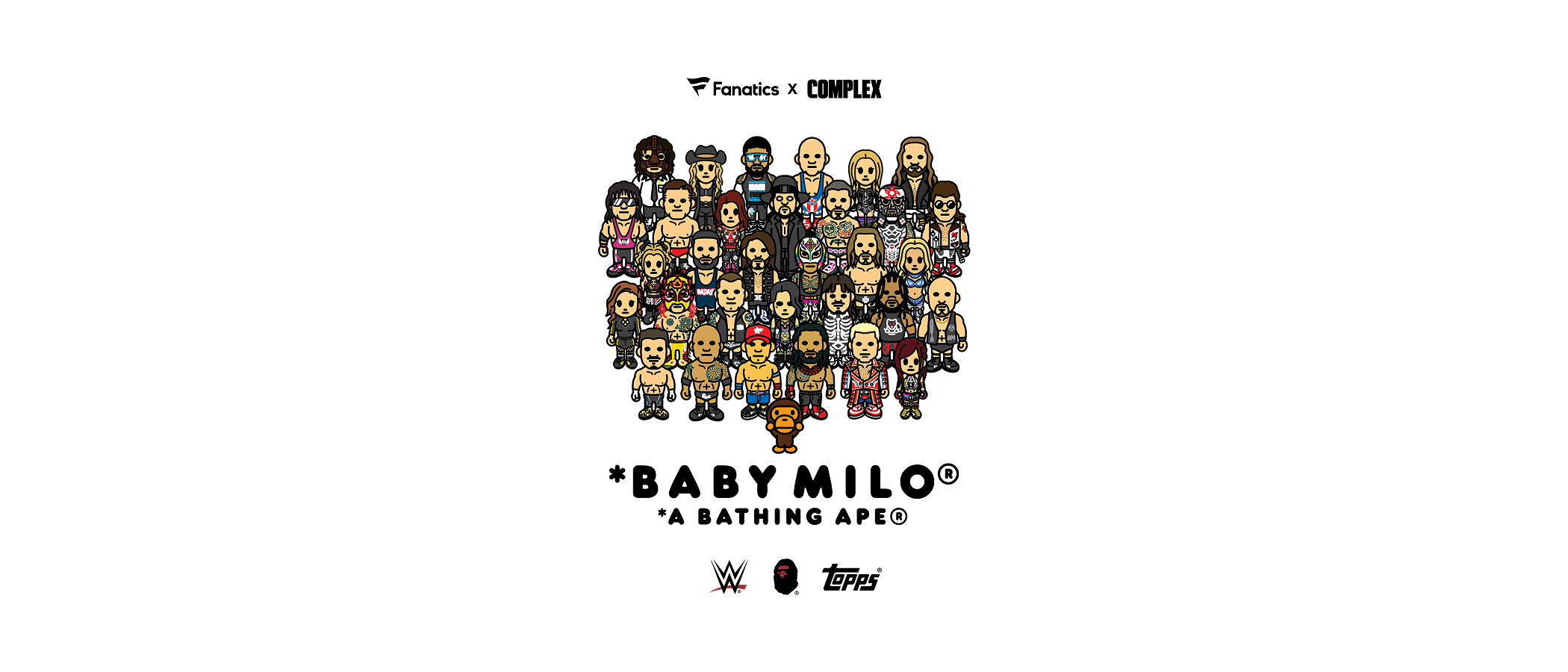
In the 2020s, Baby Milo has continued to evolve.. In 2024, BAPE celebrated Baby Milo’s 25th anniversary, proving his role as one of its most enduring creations. After two and a half decades, his design has barely changed, which is part of why he resonates across generations. Millennials remember him from the early BAPE boom, and Gen Z meets him through new collabs like WWE, Sanrio, and more.
Read the full article here