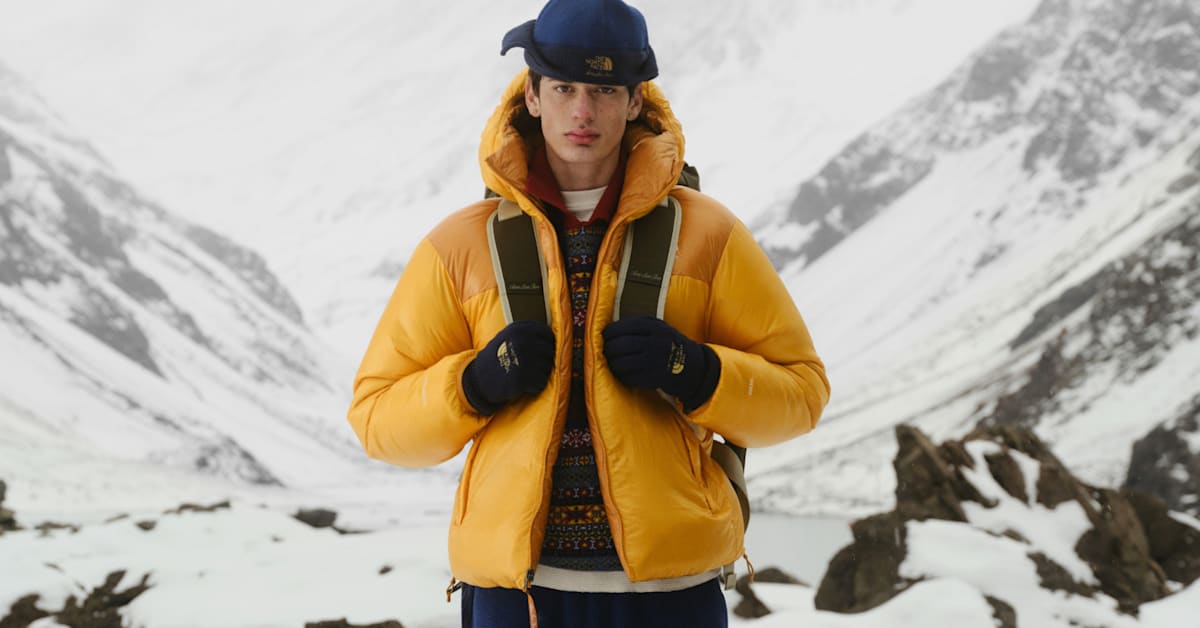

Culture in Focus is a collaborative project that invited three top photographers from Google Pixel’s Creator Labs program to shoot the leading fashion trends of the past 11 years through the lens of the Pixel 11 Pro, the line’s best camera yet*. Dana Scruggs, Justin French, and Campbell Addy each chose to shoot trends that personally resonated with them, including everything from 2016 Rockstar Lifestyle to 2026 Urban Adventurer. Here, we interview each photographer about their craft, process, and shooting fashion editorials on Google Pixel 11 Pro without having to tote pounds of gear around. Dana Scruggs is first up. This is her story.
Dana Scruggs knows there’s a time and place for stillness in photography, but she’s drawn to motion and emotion and uses whatever instructions are necessary to get her models to move and express themselves. Vague commands like “act crazy” or “be free” don’t give her subjects much to work with. But telling them to pretend they’re spaghetti thrown against the wall, imitating how it makes its way to the floor, or that they’re seeing a sunset for the first time after being imprisoned for ten years evokes different kinds of responses and thus creates more meaningful images. Getting the most out of the talent has made the Chicago native a distinct and in-demand photographer, and the perfect fit for Google Pixel’s Culture in Focus campaign.
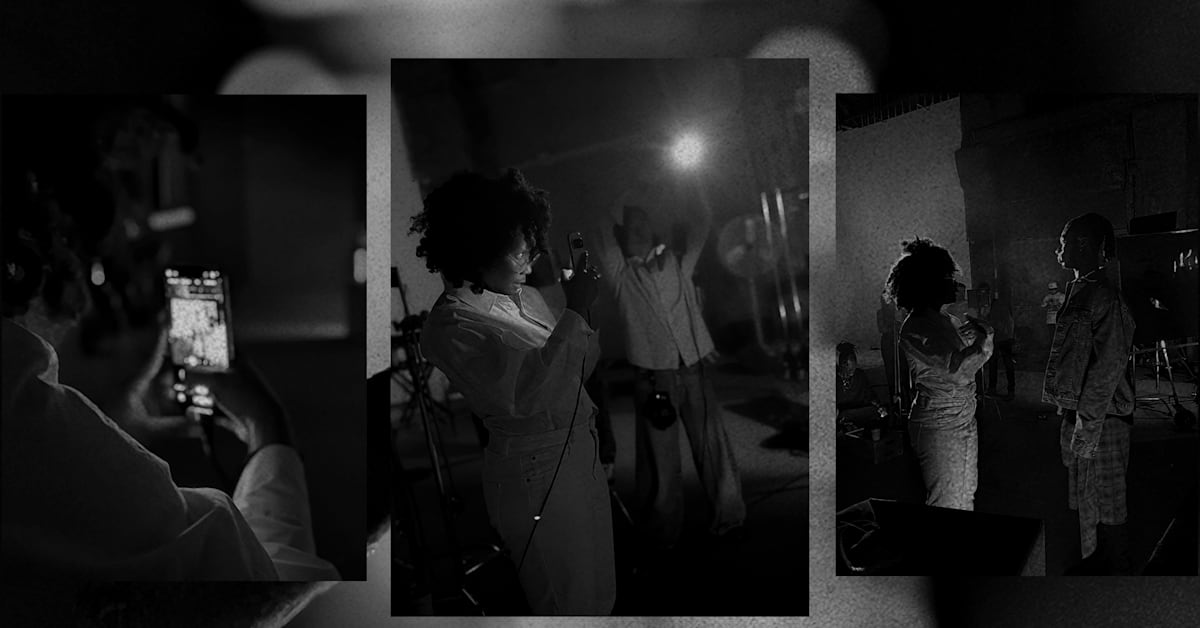
When we meet on the set of her Culture in Focus shoot, Scruggs is wearing a white collared shirt and jeans with a chunky, low-heeled slingback. She has on minimal makeup and octagon-shaped glasses. She sits with her ankles crossed, her back tall, and her hands on her legs. Scruggs is personable, funny, and poised, with a full, soft Afro that echoes the movement she loves to capture in her photography. We’re seated in a back room inside a Greenpoint, Brooklyn, warehouse, away from the hubbub of a busy shoot day and new construction outside. Here, Scruggs detailed her unconventional path to photography, the power of the Google Pixel 11 Pro, and the one person from the last decade she wishes she photographed more.
Dana Scruggs, you have our attention.
What drew you to photography?
Depression. I was living in Chicago and going through a period of deep depression. I was too depressed to work and too depressed to leave my house. I would go across the street to the bodega and get an avocado, a chocolate bar, and a soda every day. That was my routine. The only other time I’d leave the house was to drive to McDonald’s at 2 a.m. for a double cheeseburger because it was a dollar. I was in a bad place mentally, and I thought, okay, how can I pay my rent? I had a ton of vintage clothing and furniture in my apartment, so I decided to try selling it on Etsy to make money.
I had a little crappy point-and-shoot, and I started just shooting the clothes on hangers. Then I thought, people on Etsy go ham—they have really elevated photography—so I need a real camera, and I need models. My mom helped me get my first camera on her Best Buy card, and I found models online who’d come to my apartment to shoot. My Etsy shop started doing well, and I’d post the photos online just to attract more models. I wasn’t thinking about being a photographer. I enjoyed making the images, but it wasn’t an identity yet. Then modeling agencies started reaching out to me to test with their models, and I thought, huh, maybe this could be a thing. Within a year or so, I moved to New York to be a photographer full-time.
Your images not only showcase motion, but also emotion. How do you create still images that get to the heart of the matter?
Giving people a nugget of direction to hold onto while you’re photographing them is helpful, because if you just tell people to get crazy, it’s too abstract, too vague. But if I tell someone, ‘Pretend like you’re seeing the sun for the first time, and you’ve been in prison for ten years and it’s your first sunrise,’ that lands.
I shot the Tony Award nominees for The New York Times for the second time this year, and we were shooting motion as well. For a bunch of them, I wanted a spontaneous, crying moment, and also a slow emotional facial response. A lot of them did really well with that. For movement, I’ll tell people, ‘Pretend you’re a piece of spaghetti that was just thrown against the wall. How does that spaghetti make it down to the floor?’ Or, ‘You’re a leaf in the wind, and you don’t know where it’s going to go, up, down, sideways.’ I give them something tangible their imagination can hold onto, instead of just ‘move around, get crazy.’
This campaign focuses on the fashion and culture of the last decade, and you’re tasked with capturing trends from 2016, 2019, and 2024. How did you creatively prepare? And is there anything that stands out to you from these trends?
I leaned into the creative side a lot, because I was on the road, working constantly through some of those years. So I asked a lot of questions of the Complex team, who have a more in-depth point of view on the fashion of each era, the mindset, and what it was really trying to convey. The earlier era was the easiest for me because it’s more straightforward—it’s closer to my own time, so I just got it.
What creative challenges have you experienced that the Google Pixel has helped you overcome?
One of the challenges I’ve found with cell phone cameras is not being able to control the ISO and the shutter speed. A lot of my work involves multiple exposures and slow-shutter techniques, and I hadn’t been able to translate that from a DSLR to a phone. I’ve been working with Google for almost three years now, and Pixel is the first cell phone camera I’ve used where I can actually control shutter speed and ISO. Where I’m able to make multiple-exposure images, slow-shutter images, and build a whole process around that.
What kind of person are you when you’re not working? Who are you?
I’m a really nice person. I love to watch movies. I dissociate a lot from the pressures of things through film. I love Michael Mann; I love Heat; I love The Last of the Mohicans. I love action movies. Heat is basically a perfect film—the acting, the cinematography, the set design, every frame. It’s a gorgeous movie. I’m trying to move more into directing and narrative work, so watching films gives me ideas and helps me hone my eye. How to frame things, how to light them. So yeah, I watch a lot of movies and TV, and I read too.
I find you to be very funny and personable. Is that fair to say, or are you quiet?
I’m an introvert, to be honest. I’ve had to force myself into being like this. I think I am pretty funny, honestly. I’m an only child, and I spent a lot of time by myself growing up, so I had to make my own fun. In high school, I had friends who pushed me outside my comfort zone to talk to people and be more outgoing, and in these kinds of settings you can’t be quiet. You have to learn how to articulate yourself, how to be engaging. It wasn’t easy for me at first.
What do you think of Google Pixel after having used it in so much of your work?
I’ve had so many Google Pixel phones and I’ve seen the progression, not just in image quality, but in the settings and Pro controls over the past three years. The work I’ve made with the Google Pixel is work that lives in my archive. It’s fine art. It’s pushed my aesthetic and my capabilities to the next level, and it’s work I’m really proud of. Every time I shoot with Pixel, I feel like my work goes further—the creativity, the abstraction that’s integral to what I make. The multiple exposures, the slow shutter. It elevates the work. It’s like having a professional camera that fits in your pocket.
What is the difference between a good shot and a great shot, and how does the Google Pixel help you get the great shot?
I think the difference is all the elements coming together. The face, the body, the lighting, the fingertips, the toes. I’m always making micro-adjustments when I’m posing someone, even if they’re in motion: ‘Lift the wrist. Finger up. Point that toe. Hold it! Hold it! Let yourself fall off balance.’ There’s a slight abstraction to that. Or maybe it’s just a headshot, and there’s something in the eyes, an in-between moment. I always tell people to breathe through their mouths. Just a little breath between the lips, because it opens up the image. When your mouth is closed, the image is closed. When you take that breath in, and your eyes connect with the lens, the person looking at the photo takes a breath too, or at least I do.That engagement, that lack of passivity, is the difference for me. I don’t like making passive, forgettable work. I think that’s a good thing. People who are too satisfied all the time, in work and in life, it shows. I’m not saying I’m the greatest photographer ever, but I’m trying my hardest not to be complacent, not to do the bare minimum just because I’ve had some success.
If you had to capture one image from 2016, 2019, and 2024, what would it be?
I’d take a picture of my granny because she died in 2018. She always fought me on having her picture taken; she didn’t like it. But once I started becoming successful, once she understood what I was doing, she’d turn on the Today Show and see a photo I’d taken, or go to the grocery store and see a cover I’d shot. She said, ‘Okay, I’ll let you take my picture.’ Before that, it was a firm no, or she’d just keep moving so I couldn’t get a proper shot. I really love the images I got of her that day, but if I had the Google Pixel back then, I’d have taken even more photos of her.
There can be this beef between technology and art. Some people think technology has diluted art, while others believe it’s the artist’s use of technology that helps propel their work. Where do you sit?
I definitely think an artist’s use of technology propels art. When I shot the first cover for my magazine, Scruggs, that shoot ended up being the last one I finished over two years later. I had nearly sixty versions of one image. Part of it was my skill set finally catching up to the vision I had. I didn’t have the retouching skills yet, because it was so early in my career. I didn’t go to school for this. I went to YouTube University to learn how to retouch and do everything else.
Do you feel like technology has shortened the distance between skill and vision?
With AI, probably. I still retouch all my personal work myself. But if I’m shooting for a publication or a brand, I’ll work with a retoucher who brings the images to a certain clean baseline, and then I add my color, and we go back and forth on adjustments. Technology is helpful. Being able to take an image from a raw file to a fully realized image is a skill set I think a lot of people need to have. Even before AI, I knew a few young photographers who didn’t know how to retouch at all. They’d just send everything off to be retouched somewhere else and get it back. I always thought, you’re skipping a lot of steps, because you’re not developing your own eye, your own signature, your own clear sense of your aesthetic. That’s what happened for me, tweaking those images for two, three, four, five years. I was discovering how I wanted my work to look, how far I wanted to push it, because I wasn’t relying on someone else’s vision. I was just trying, over and over, pushing the image again and again.
What advice do you have for young photographers trying to get to where you are?
I think one thing people lose sight of, especially in a social-media world where you see all the different cameras, lenses, lights, and gear people use, is that you can have every camera and every light in the world and still be a terrible photographer. It doesn’t matter what you’re using. A product like the Google Pixel is a great option in place of, or even in addition to, a DSLR camera. Get a phone that can actually deliver the technical capabilities of a DSLR until you can get one, or maybe that’s all you ever need. Some photographers have built incredible bodies of work shooting only on disposable cameras. It’s whatever you use to create the art—use it.
I don’t think it matters what you’re using if the work aligns with your vision and gets you started. Sometimes people think, ‘I can’t get started because I don’t have a real camera.’ But you actually do; it’s in your pocket. So my advice is: get the Google Pixel, and just start taking pictures of your friends, your family. Don’t worry about having models or lights. I shot outdoors for six and a half years and never used a light until my big break. So just keep going. Use a Pixel to get where you want to go.
When they’re live, you can see Dana’s Culture in Focus shoots here: 2016 Rockstar Lifestyle, 2019 Vertical Video E-Boy, and 2024 Y2K. Then, stay tuned to check out the BTS video from her shoots here.
*Comparison is to other Google Pixel phones only.
Read the full article here