



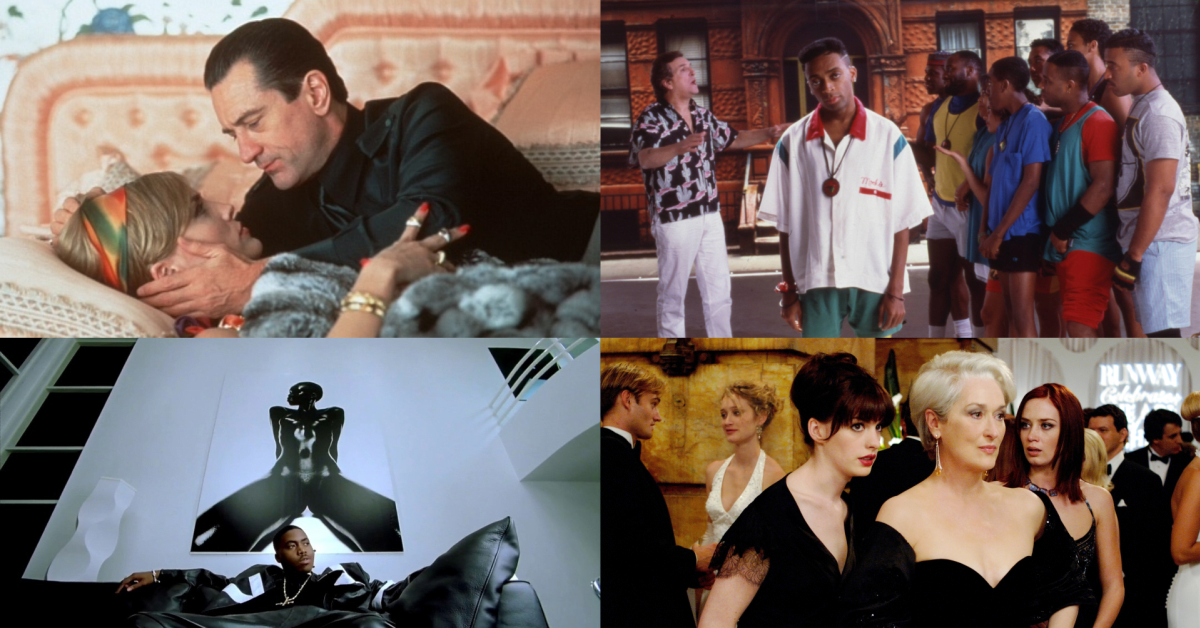

Not all great movies are stylish, but all stylish movies are great. True style is rooted in authenticity. The most stylish movies recognize that and are cherished because of it. They offer more than just wonderful scenes to reference. Our favorite on-screen wardrobes capture how style can transform the course of a character’s life and help define a moment in time.
In 2025, we were blessed with two movies to add to the list of all-time greats, Sinners and Marty Supreme. Each perfectly captured the essence of the eras they are set in and introduced us to character’s wardrobes that we will be inspired by for years to come.
Ahead of the 2026 Oscars, these are our picks for The 20 Most Stylish Movies of All Time.
Style: Sportswear chic
Costume Designer: Jonathan Anderson
This spicy tennis flick isn’t only an ode to the sweaty spirit and occasional homoeroticism of competitive tennis through director Luca Guadagnino’s lens, but it’s also fashion designer JW Anderson’s first foray into designing movie costumes. Detail-oriented wardrobe propels the story, with Anderson bringing his avant-garde, deconstructed aesthetic to the world of high-stakes tennis. His costumes blur the lines between performance wear and streetwear, injecting the film with an off-court cool that mirrors tennis’ growing influence in fashion (see: Art’s “I Told Ya” T-shirt., inspired by John F. Kennedy’s 1961 presidential campaign slogan “I Told You So,” later produced and sold by Loewe). It’s tennis-core-turned-high fashion, perfectly mirroring the film’s tension and sensuality. –Maya Kotomori
Style: Savage, yet satin-y, menswear
Costume Designer: Erin Benach
The case for Ryan Gosling as a contemporary leading man par excellence is spread across a number of movies. But the case for Gosling as a stylish dude other dudes want to be? Well, obviously it’s when he smokes crack as a middle-school teacher. Just kidding. It’s Drive. Obviously Drive. And it’s Drive because of the jacket. You may not have seen the movie, but you know the jacket. He looks incredible in the jacket, even when he’s doing violent, terrible things that no cool guy would engage in. Sometimes a movie’s style reputation rests on a single garment, and this is one of those cases. –Ross Scarano
Style: Sci-fi couture
Costume Designer: Jean Paul Gaultier
Luc Besson’s The Fifth Element isn’t just a sci-fi masterpiece—it’s a visual feast of futuristic fashion, brought to life by the visionary Jean-Paul Gaultier. Known for his bold, boundary-pushing designs, Gaultier crafted over 1,000 costumes for the film that merged haute couture with sci-fi spectacle.
Leeloo’s iconic bandage ensemble transforms medical gauze into a daring, avant-garde look, while Ruby Rhod’s leopard-print jumpsuits radiate pure Gaultier energy—flamboyant, theatrical, and impossible to ignore. Even the police uniforms bear his unmistakable touch, featuring mesh, vinyl, and fetish-inspired details that make the future feel as stylish as it is chaotic.
Gaultier’s designs make the 23rd century feel tangible, ensuring each character looks like they belong in this vibrant, futuristic society. Despite their high-fashion edge, they never feel like artificial creations; they feel like real clothing worn by real people navigating their daily lives. It makes the film’s future vision feel authentic rather than exaggerated. –Jamal Desroches
Style: Worn-in Hollywood grit
Costume Designer: Arianne Phillips
If aspiration had a look, it would be actor Rick Dalton’s (Leonardo DiCaprio) cowboy boots and Steve McQueen-inspired medallion necklace that reflect his struggle to maintain his Western star image. If confidence were an outfit, it would be Dalton’s stuntman Cliff Booth’s (Brad Pitt) effortless Wrangler Canadian tuxedo. Margot Robbie’s rendition of Sharon Tate wears fur coats and black go-go boots, paired with the real Tate’s jewelry, which adds an authenticity and warmth to the ’60s period film. Western motifs also play an integral role in the styling through Bounty Law and Lancer, the intra-movie television shows in which Dalton star. Aged leathers, fringe, and oversized belt buckles ground the film’s Hollywood cowboy aesthetic. The faithfulness to the time period extends to details like Cliff’s Champion ringer tee and a selection of other clothing only from brands active in the ’60s and ’70s. This careful styling enhances storytelling, capturing the essence of the era without relying on obvious visual shorthand. –Maya Kotomori
Style: Aspirational excess
Costume Designer: Patricia Norris
Sunshine, plastic, sequins, machine guns—1980s Miami is not just represented, but canonized in Brian De Palma’s Scarface. We see kingpin-in-training Tony Montana (Al Pacino) earn his status in the transition from his loose-fitting guayaberas to ritzy white suits with wide lapels unbuttoned to show his gold chains. There has perhaps never been a better on-screen cocktail dress than Elvira Hancock’s (Michelle Pfeiffer) dramatic deep V-line halter dress covered in gold sequins by Roy Halston. Even the supporting characters reflect the film’s gaudy yet magnetic aesthetic, from Manny’s (Steven Bauer) unbuttoned silk shirts to Frank Lopez’s (Robert Loggia) sharp pinstripe suits, reinforcing the era’s obsession with excess, and foretelling each characters’ ambition, indulgence, and eventual downfall. –Maya Kotomori
Style: 1950s dreamer
Costume Designer: Miyako Bellizzi
A majority of the style conversations about Marty Supreme revolved around the amazing merch that helped promote it, but good style is also present in the film itself. All of Marty Mauser’s outfits effortlessly transport you back to the ‘50s. His more casual looks feature high-waisted trousers with perfect pleats and unbuttoned shirts. When he travels to Europe, he pulls out his finest pinstriped suit and red leather gloves, his best attempt to fit in with the elite company he needs to schmooze to get back into the world championship tournament. Even the table tennis scenes include amazing pieces, like the Team USA warmup gear, and featuring embroidered patches and polos with big pointed collars that you would lose it for if you found them in a vintage store in 2026. Mauser believes he is the best in the world, even if that isn’t entirely true. His wardrobe is a big reason he possesses that level of confidence. —Mike DeStefano
Style: ’90s hip-hop
Costume Designer: Donna Berwick
Director Ernest Dickerson’s Harlem coming-of-age movie is as cinematically deep as it is sartorially specific. Bucket hats, light wash denim-on-denim, and headphones set the tone for the story of four friends—Quincy “Q” Powell (Omar Epps), Raheem Porter, Roland Bishop (Tupac Shakur), and Eric “Steel” Thurman. The film’s opening scene is a montage of the four teens getting ready for school, each with their own take on the ’90s hip-hop style that underscores the film: Q puts on a floppy orange bucket hat and headphones; Raheem, a form-fitting white tee to show off his muscles; Steel, a pattern-clashing pair of red plaid dungarees and a mime-like black and white striped turtleneck; and Bishop, a simple navy bomber jacket with his signature AR-15 medallion peeking out. With a heavy hip-hop influence (the film is Tupac’s acting debut) and cameos from legends like Queen Latifah, gold chains and oversized cargo jackets aren’t just signifiers of clout or nifty tools for smuggling vinyl out of record stores, but garments representative of a lifestyle—a dedication to chasing cool. –Maya Kotomori
Style: Restrained sensuality
Costume Designer: William Chang
In the Mood for Love is as much a visual poem as it is a story of unspoken desire, with its costume design serving as a key narrator of emotion. In the film, Su Li-zhen (Maggie Cheung) wears a total of 23 different Qi Paos (aka cheongsams), a high collar, form-fitting dress traditionally worn by Chinese women. Each reflect her shifting emotions and restrained relationship with Chow Mo-wan (Tony Leung). The cheongsams subtly shift from delicate florals and soft pastels in moments of vulnerability to bold, rich hues as Su’s emotions intensify. The dresses evoke both the glamour of 1960s Hong Kong and the societal constraints placed upon her character. –Shinnie Park
Style: Editorial elitism
Costume Designer: Patricia Field
The Devil Wears Prada is what happens when you put the mastermind behind Sex and the City’s wardrobe, Patricia Field, to work on a fashion movie. Andy Sachs (Anne Hathaway) starts off drowning in lumpy cerulean sweaters, because, as Miranda Priestly (Meryl Streep) reminds us, “It’s not just blue, it’s not turquoise, it’s not lapis—it’s actually cerulean.” Her wardrobe evolution tracks her transformation from someone who didn’t take fashion seriously to someone indoctrinated by it.
Then, there’s Priestly asserting her dominance in perfectly tailored Prada suits. She glides, delivering icy glares and deep-cut one-liners like, “That’s all.” Field stretched a $100,000 budget into a $1 million wardrobe, calling in industry favors to pack the film with archival designer pieces. –Shinnie Park
Style: ‘90s West Coast hip-hop
Costume Designer: Sylvia Vega-Vasquez
When the Hughes Brothers’ Menace II Society hit theaters in May 1993, popular culture had shifted to the Chuck Taylors and Dickies of the West Coast, primarily due to Dr. Dre’s success with The Chronic and Snoop Dogg’s debut album, Doggystyle. Menace brought those G-funk tales to the big screen. And with certified cats like MC Eiht and Too $hort making appearances in the film, you know their gear had to be on point. Caine stayed with a fit, lowkey; the murder he is a part of that opens the film features him in a baggy, striped Guess Jeans top that’s accented perfectly with his gold cross necklace. The film’s bold colors and baggier fits were staples in the hood, adding layers of authenticity to this gritty classic. —khal
Style: Unrivaled basketball grails
Costume Designer: Francine Jamison-Tanchuck
A telltale sign of the strength within White Men Can’t Jump’s costuming lies in its ability to propel the film’s real, on-court humor. There are obvious cultural and societal nuances of why Woody Harrelson’s outfits are an easy dig for Wesley Snipes, but the player-on-player, clothing-related trash talk really transports audiences to Venice Beach basketball courts in the ’90s. Bonus points for the extra deep, stretched-out tank tops, decade-defining printed shorts, and cycling caps that appear on Sidney Deane and Billy Hoyle. Sneaker grails like the Air Jordan 6 “Black Infrared” and Nike Air Command Force fly under the radar as the characters’ training garb. –Kirsten Chen
Style: High-school shopping addict
Costume Designer: Mona May
Stepping away from the popular grunge styles of the ’90s, Clueless presents a guide on ruling your teenage years instead of blending in with your peers. Led by the lovable Cher Horowitz (Alicia Silverstone), the queen bee’s wardrobe is an education on how teens can reference runway-inspired looks while staying true to age-appropriate cuts. When you’re a (fashion) virgin, Clueless wins for sartorially capturing adolescent experiences– surveying schoolyard archetypes, dabbling in rave culture, and confidently strutting in the perfect, preppy first-day-of-school outfit. Once you’re, like, totally indoctrinated, you’ll never stop quoting the designer labels woven into its dialogue: “It’s an ALAÏA!” –Kirsten Chen
Style: The wise guy’s wardrobe
Costume Designer: Richard Bruno
As Henry Hill climbs the ranks of the Italian mafia, he also goes through quite the style evolution in this Martin Scorsese classic. The film spans three decades, from 1955 to 1980, and each era is represented to perfection. We see Hill, played by the late legend Ray Liotta, cycle through a variety of quintessential ensembles of a made man. A gray silk suit and some alligator loafers showcase peak gangster elegance. Buttery leather jackets, a staple in any respectable mobster’s closet, are worn by Hill when it’s time to handle business (no blood stains to speak of though, impressive). There’s a blue striped knit so good it’s been replicated by brands many times over since its brief-but-memorable debut. Hill kept it casual by pairing it with a white tank top and gold crucifix chain. We even see Hill don a classic Adidas tracksuit at one point in the film, a look that’s become a staple in many Italian American closets. Tommy and Jimmy’s array of clean suits with giant pointed collars and plaid blazers add to the stellar style, but Hill steals the show. –Mike DeStefano
Style: Modern Elizabethan
Costume Designer: Kym Barrett
Baz Luhrmann’s Romeo + Juliet is celebrated for its contemporary reinterpretation of Shakespeare. The looks were instrumental in crafting a look that resonated with modern audiences, while nodding to the Old English stage play. Barrett approached the film by melding present-day ready-to-wear with subtle Elizabethan cues. Leonardo DiCaprio’s wedding suit was famously custom-made by Prada and Claire Danes’ gown was embroidered with hidden excerpts of Shakespeare’s verse. The Capulet boys’ waistcoats and cowboy belts were from Dolce & Gabbana, while the mob bosses and their wives were dressed in Yves Saint Laurent’s signature tailored looks for the film. The rest of the costumes were made in-house by Barrett’s team, who hand-painted every detail on DiCaprio’s iconic Hawaiian shirt. –Shinnie Park
Style: 1930s gangster couture
Costume Designer: Ruth E. Carter
Kudos to the creative minds at Marvel Studios for dreaming up, then ultimately destroying, the idea to have a Blade film set in the 1920s. That start-stop of a production ended up netting Ryan Coogler’s Sinners, a blues-drenched vampire flick featuring an epic showdown in a juke joint, the period-specific wardrobe for its cast. Both films shared a costume designer in the Oscar-winning Ruth E. Carter, who was able to take those clothes and add an element to the “American story” Carter says Coogler was telling. Drenching the film in reds, whites, and blues also helped define the characters of Smoke and Stack, both portrayed by Michael B. Jordan (the more blue-collar Smoke rocking blue while Stack’s flamboyance stands out more in reds). The color palette’s became so definitive that during the Sinners awards season campaign, viewers are pointing out which brother accepted each award. You may not be looking to get fresh like Smoke and Stack to head to the office, but if you are, think about what the colors you’re wearing can say about you. —khal
Style: ’90s skate rat
Costume Designer: Kim Marie Druce
Larry Clark’s cult classic was a raw snapshot of the teenage skate rats navigating the Lower East Side in the ’90s. It wasn’t trying to wow us with its wardrobe. It was impactful because it was real. The cast was actual Manhattan kids. This is what they actually wore everyday. The boys skate through the city in super baggy khaki pants you could fit a 40 in, tall tees from popular skate brands like Independent, Ralph Lauren rugbies, and tops from upstart shops like Supreme (a 2015 collab with the streetwear titan has probably helped bolster Kids’ style cred). Chloe Sevigny’s pixie cut, blue jeans, and cropped ringer tees made her a fashion “it” girl, a title she still holds to this day. A lot of the gear worn in the 90-minute movie is what you still might see the youth rocking if you spent an afternoon in LES today. The style cues have remained relevant through what we now refer to as streetwear. –Mike DeStefano
Style: Diamond District dirtbag
Costume Designer: Miyako Bellizzi
At first glance, Howard Ratner looks every bit the part of one of the Diamond District’s go-to jewelers. By the end of the Safdie Brothers thrill ride, you begin to wonder if all of his checks actually got dumped on Kevin Garnett over/unders and his Ferragamo belt is really a Canal Street special. But does it even really matter? Real or fugazi, Ratner stayed dripped down, from his ruby-faced bussdown Rolex to his buttery Hugo Boss leather jacket. Mix in looks from the supporting cast like The Weeknd’s camo set in the night club scene and KG’s Pelle Pelle and you have one of the flyest movies of the 21st century. —Mike DeStefano
Style: Luxurious ’90s streetwear
Costume Designer: June Ambrose
The three-minute intro to Belly is one of the most visually iconic sequences in hip-hop film history, and the movie itself is arguably one of the greatest style films ever created. A cult classic, Belly was directed by legendary music video director Hype Williams, known for his visually striking aesthetic. The film’s wardrobe heavily reflects late ’90s hip-hop fashion, seamlessly blending streetwear with high-end luxury. From Nas’ black leather Evisu trench coat and pants, white Avirex jacket, and Paolo Gucci sunglasses to Method Man’s bright yellow Avirex leather, Belly redefined how Black culture is represented in both fashion and cinema. Other notable brands featured include Enyce, Eckō, Timberland, Versace, Carhartt, and Phat Farm. The looks were so culturally influential that they continue to inspire brands and designers today, whether it be Supreme’s Fall/Winter 2021 collection and Joe Freshgoods’ New Balance 990v4 collection from 2023. –Bree Walker
Style: A timeless summertime blueprint
Costume Designer: Ruth E. Carter
This classic Spike Lee joint is rife with memorable style moments. The classic Nike footwear might be the most noteworthy aspect, from Mookie’s “Medicine Ball” Air Trainer 3s to Buggin’ Out’s scuffed “White Cement” Air Jordan 4s. It’s easy to see why the film has become ingrained in modern sneaker culture.
It isn’t just the shoes. Side characters sport jerseys showing love to the era’s superstar athletes, like Larry Bird and Magic Johnson. Mookie spends half the movie in a throwback Jackie Robinson Dodgers jersey, which doubles as a nice nod to the film’s location and its powerful messaging about race relations in America. Accessories like Radio Raheem’s “Love” and “Hate” four-finger rings or Buggin’ Out’s circular glasses stay etched in your memory. Countless other characters wore era-defining pieces like vibrant tank tops, knee-length shorts covered in bold patterns, and cycling caps in every color. It was a perfect culmination of Brooklyn street style in the ’80s, but the looks have stood the test of time. If you go outside on a sweltering summer day, you’ll still see these outfits. Now, they aren’t just limited to one of the five boroughs. They’re worldwide. Do the Right Thing played a major role in introducing them to the masses. –Mike DeStefano
Style: Unmatched opulence
Costume Designer: Rita Ryack and John A. Dunn
There aren’t many cities more extravagant than Las Vegas. Ace Rothstein’s wardrobe in Casino effortlessly matched that energy to teleport us back to Sin City in the ’70s and ’80s. The mobster played by Robert De Niro appears on screen in over 50 different suits that span every color imaginable, from flamingo pink to shamrock green. After all, Vegas is about excess, right? Louis Vuitton luggage and Carrera shades accentuate each look. Even Rothstein’s silk house robes ooze opulence. And we cannot talk about Casino without mentioning Rothstein’s wife Ginger McKenna, played by Sharon Stone, who wore chinchilla furs, shimmering gold gowns from Bob Mackie, and an ice blue leather set from Courrèges that’s been a mainstay on women’s fashion moodboards for the past 30 years. It is all accessorized with breathtaking gold and diamonds, courtesy of Cartier, Bulgari, and Van Cleef. Martin Scorsese reportedly gave costume designers Rita Ryback and John A. Dunn $1 million to achieve their vision, and they spared no expense. The gamble paid off. Casino hit the style jackpot. –Mike DeStefano
Read the full article here


